Sunday, 21 April 2013

Formation of Wave Cut Platforms


High and steep waves crash into the foot of the cliff, focusing their erosive capabilities into a small area.

A wave cut notch is created by undercutting the cliff:
Continual undercutting causes increased stress and tension in the cliff which eventually collapses.

Rock debris collects at the foot of the cliff and forms a terrace which is eventually moved into deeper water by backswash or along the beach by longshore drift.

The cliffs continue to retreat leaving behind a gently sloping (less than 5 degrees) wave cut platform.

This means that the waves break further out to sea and have to travel across more platform before reaching the cliff line.

This leads to a greater dissipation of wave energy which reduces the rate of erosion of the headland which slows the growth of the wave cut platform.

Saturday, 20 April 2013

Managing Coastal Environments: Shoreline Management Plans

have been developed by local councils and the environment agency, adopting a more holistic approach.

Coastal defence authorities can't carry out works without the aid of a shoreline management plan.

Tend to include:

  1. Hold the Line - maintain/upgrade the level of protection provided by the existing coastal defences
  2. Advance the line - Build new defences seaward of the existing defence line
  3. Managed Realignment - allow retreat of the shoreline inland with management to control or limit that movement
  4. No active Intervention - a decision not to invest in providing or maintaining defences
Sustainable Future?
  • Sea levels are predicted to continue to rise approx 6m a year because of global warming
  • Areas of the UK continue to sink because of isostatic uplift, changing at the rate of 2mm a year
  • The use of public money to defend the undefendable is unsustainable
  • A 'do nothing' approach is often the only affordable way in the long term


Sediment Cells

The movement of sand and shingle in the nearshore zone by longshore drift has been found to occur in discrete, functionally separate sediment cells.

There are 11 such cells around England and Wales with smaller sub cells within them eg from The Wash to The Thames.

The main cells are defined as a length of coast and its associated nearshore area within which the movement of coarser sediment is largely self contained.

Interruptions to sediment within one cell should not affect beaches in adjacent cells.

Malthusian population theory

Name: Thomas Malthus
Date: 1798

Main Arguments:

  • Population increases faster than food supply and supporting resources
  • Increasing population could lead to war, famine and disease
  • PREVENTION: Celibacy, delaying marriage and having less children
  • War, famine and disease are good things as they increase mortality
Limitations/Criticisms:
  • Didn't foresee the development of new technology like GM crops
  • Was wrong in assuming that overpopulation was the reason for famine, there are many factors, like war
  • Didn't consider that people would eventually control their birth rates
Case Study:
In 1960 Mauritius had finite island and the fastest growing population in the world.
Most of the land was used to grow sugar, but it was a cash crop that went to MEDCs.

How it was solved:

Family planning meant that fertility rates were halved from 6 children a woman to 3.

Promotion of contraception meant that in 2001 the population was 1.1 million where it would have otherwise been 3 million.

Ester Boserup Population Theory

Name: Ester Boserup
Date: 1965

Main Arguments:

  • Increases in population stimulates the development of technology for things like food production
  • Incentive to modify technology to produce more food
  • "Necessity is the mother of all invention"
  • eg GM crops
Limitations/Criticisms:
  • Things like GM crops are more susceptible to disease
  • GM seeds are more susceptible to drought
  • There was a 27% increase in cancer rates after they were introduced in the Phillipines
Real life examples:
  1. The Phillipines 1966-1986, rice production increased from 3.7 million tonnes to 7.7 million tonnes
  2. 'Green Revolution' the widespread introduction of high yielding seeds, water control and mechanisation, use of fertilizers and pesticides to allow more people to be fed

Friday, 19 April 2013

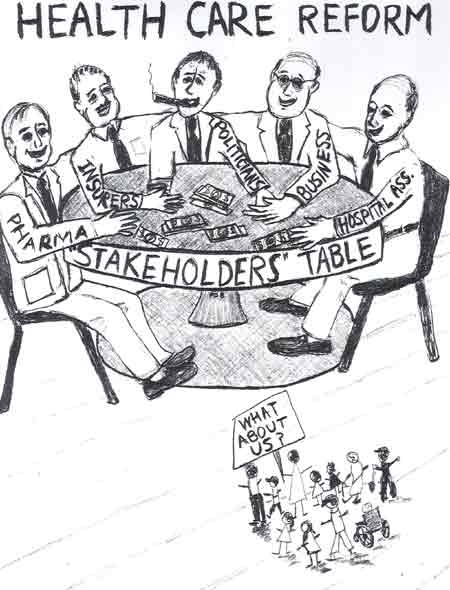
Case Study: US Health system and French Health System

USA: Free market health care provision 
  • Based on the principles of a free market economy
  • Extremely privatised
  • Most care providers are privately run organisations
  • There are a few federal, state, county and city run facilities
  • 65% of hospitals are privately run not-for profit organisations
  • Per Capita expenditure on health was US$6714 in 2006
  • One of the most expensive models in the world
  • Usually provided through health insurance with 64% of the population having some sort of medical insurance plan
  • Insurance is often paid for by employers as part of a salary package - the health insurance alone is around US$10,000 per year to an employee and their family
  • Health insurance companies operate to make a profit
  • Recently introduced some governmental support - all Americans over the age of 65 have access to Medicare
  • Medicaid provides basic state provided health care for the poorest people but not comprehensive cover - 14 million people still have no acces to healthcare
  • Around 15% of the US population (45 million) does not have any health insurance
France
  • Mainly funded by the government 
  • Administrated through a number of social insurance schemes
  • In 2004 80% of the population were covered by the main State regulated insurer
  • Individuals must pay a compulsory health insurance of 0.75% of their earnings which is deducted from their salary
  • Their employer then makes a 12.08% contribution
  • About 85% of the population also pay a voluntary top-up premium of 2.5% of their income to make sure all their health costs are fully reimbursed
  • Recently introduced a system of health coverage CMU so that those earning less than 6600 euros don't have to make any health insurance payments
  • Provided by general physicians
  • No restrictions on where doctors can set up their practises
  • Individuals have the choice of using more than one general physician
  • You can demand access to hospitals and specialist services without a referral from a general physician

Healthcare Systems

Emergent:

  • Healthcare viewed as an item of personal consumption
  • Physician operates as a solo entrepreneur
  • Professional associations are powerful
  • Private ownership of facilities
  • Direct payment of physicians
  • State's role in healthcare is minimal
  • Development of local health workers 
Eg, in India healthcare is highly diversified with both western and traditional practises operating.

Socialised:
  • Healthcare is a state-provided service
  • Physicians are state employed 
  • Professional associations are weak or non existenet
  • Facilities are wholly publicly owned
  • Payments for services are entirely indirect
  • State's role in healthcare is total
Cuba's health service is very effective, with the WHO ranking it just below the USA's despite the fact it spends 10x less. 

1 in 6 doctors in South Africa are Cuban partly because there are 21 medical schools providing free training.

Pluralistic:
  • Healthcare viewed as a consumer product 
  • Physician operates as a solo entrepreneur
  • Professional associations are powerful
  • Private and public ownership of facilities
  • State's role in healthcare is minimal and indirect
In the USA the health system is provided by thousands of independent doctor, clinics and pharmacies however the federal government recently introduced Medicaid and Medicare.

Insurance/social security:
  • Healthcare is an insured and guaranteed consumer product 
  • Physicians operate as social entrepreneurs and as members of strong professional associations
  • Private and public ownership of facilities
  • Payment for services mostly indirect
  • State's role in healthcare is evident but indirect
WHO judged the French healthcare system to be the most effective in the world, but it also very expensive accounting for 10% of France's GDP.

National Health Service:
  • Healthcare is a state supported service
  • Physicians operate as solo entrepreneurs and as members  
  • Facilities are mainly publicly owned 
  • State's role in healthcare is central and direct
The only countries with national health care are the UK and Canada. Canada's aim is to provide its citizens with equal access to healthcare regardless of their ability to pay in a scheme known as Medicare.