Showing posts with label Ecosystems. Show all posts

Tuesday, 25 March 2014

Types of Ecosystems

from the Millenium Ecosystem Assessment reporting catergories

Marine - Ocean deeper than 50m

Coastal - Interface between ocean and land

Inland Water - Permanent water bodies and areas dominated by regular flooding that are inland from the coast


Forest - Land that is at least 40% covered by woody plants taller than 5m
Rainforest Wallpaper

Dryland - Land where annual precipitation is less than two thirds of potential evaporation
File:Kenya scrubland.jpg

Islands -Land surrounded by water with a high proportion of coast to hinterland

Mountains - Land surrounded by water and with a high proportion of coast to hinterland

Polar - High Latitude systems frozen for most of the year


Cultivated - Land dominated by agriculture including orchards or forestry

Urban - Built environments with high human density and population of 5000 or more

Wednesday, 13 March 2013

Case Study: Precious Woods


What is ‘Precious Woods’? 

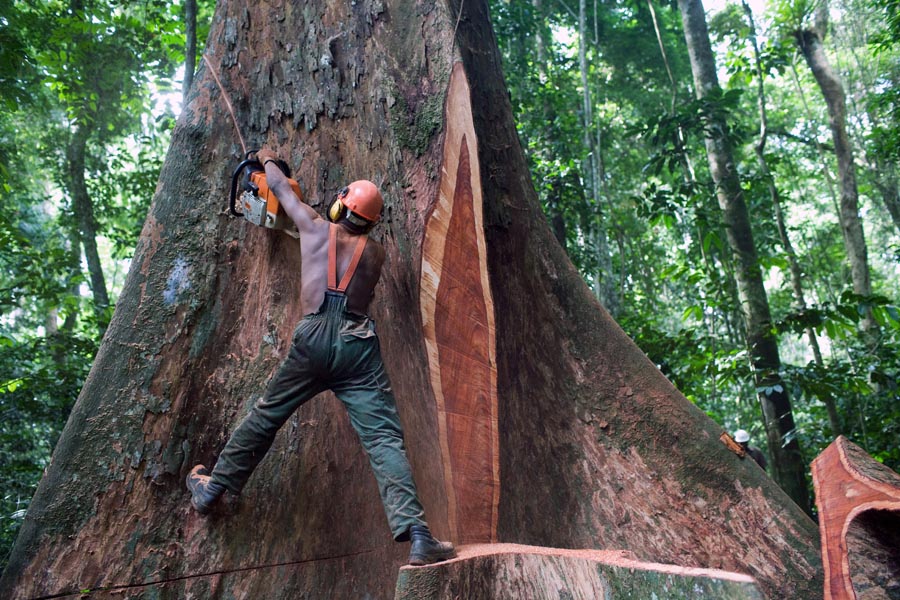
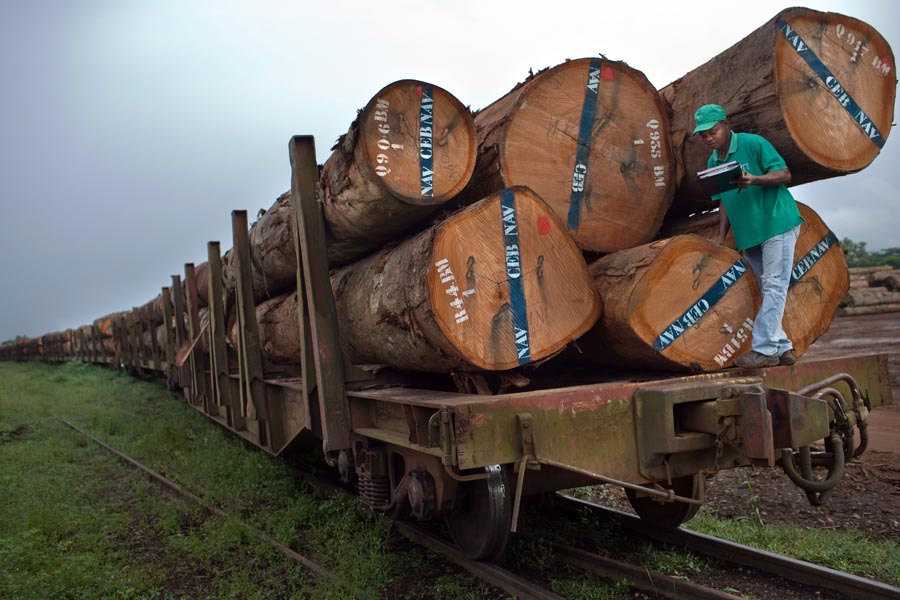
Precious Woods has been managing 450'000 hectares of its own land – mainly forest - in Itacoatiara (250 km east of Manaus, Brazil) sustainably since 1996. They use methods which imitate nature and maintain its biodiversity, and harvestry is kept within strict limits. They sell over 70 different species of wood, helping develop the market for lesser known species. In 1997, Precious Woods operations were certified in agreement with the criteria of the FSC (Forest Stewardship Council).


What they do

Precious Woods work divides into 4 sections; 

  • Forest management. Precious Woods' forests in Brazil and Gabun are managed in a sustainable way, which means that no more wood is harvested than can grown back at the same time, and that the value and size of the forest is conserved.
  • Reforestations. From 1990, Precious Woods has reforested over 6,200 hectares of deserted pastureland in Costa Rica with precious timber species such as ‘pochote’ and ‘teak’, and 20 other local species.
  • Trading. In Holland the certified rainforest timber is sold to European clients. In Brazil a supporting team manage sales to customers in South America, Asia and North America and a team in Central America manage domestic sales.
  • Energy und CO2. An important part of Precious Woods' sustainable forestry is the use of leftover waste wood to provide electricity, and sale and registration of carbon emission rights.


Forest Management 

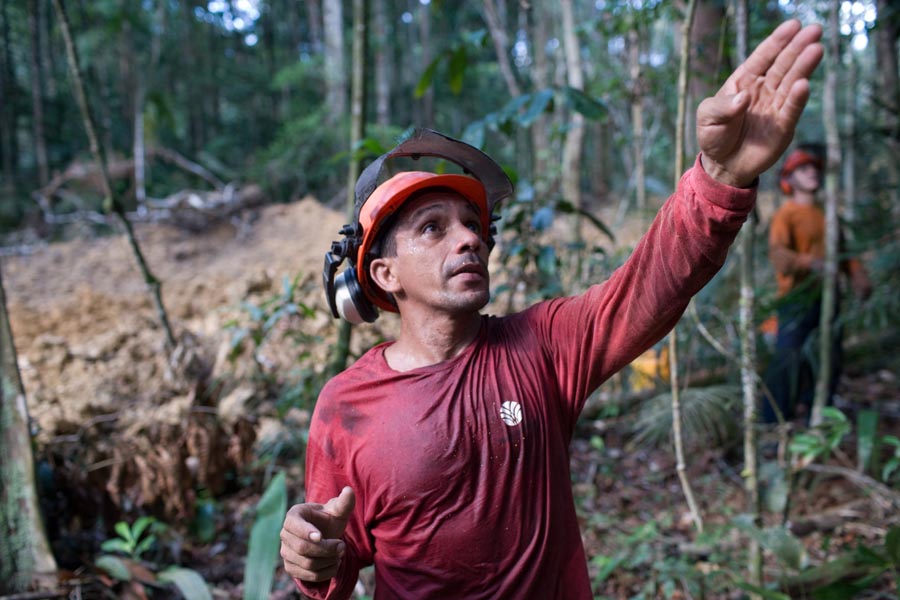
In Brazil they work in existing forests were their trees are harvested at regular intervals, however the forest in terms of both quality and quantity, is preserved. An inventory means loggers select which of the trees from among more than 70 species will be harvested. Logging is carried out with the help of appropriate materials and techniques to ensure the impact on nature is as low as possible. An extensive network of Preservation Areas creates biological corridors throughout the entire forest.


Who is the FSC?

The FSC (Forest Stewardship Council) is an international, non-governmental group dedicated to promoting responsible and sustainable management of the world’s forests. It was founded in 1993 in response to public concern about deforestation and demand for a trustworthy wood-labelling scheme. The FSC establishes international values and criteria for forest management and appoints certification boards which assess forestry companies according to how well they comply with the rules. In 1997 Precious Woods Amazon was the first business based in the Amazon to be approved by the FSC (in accordance with the criteria) under the Rainforest Alliance's Smartwood program. All of the sections of ‘Precious Woods’ have now been certified by the FSC.


Why should companies buy lesser known species of wood? 

The use of lesser-known timber species reduces pressure on well-known timber and increases the economic capability of sustainable forest management. Many less known species have dramatic, vibrant colours and textures, giving interesting new designs for architects and designers and show the remarkable alternatives to well-known species for many applications that the rainforest can provide, in terms of both price and quality.


Criticisms of sustainable forestry technique

There isn't a clear definition of the standards, so anyone can claim to be complying to the regulations, and no one can prove anything against them. They also only list parameters to be measured and not any performance standards. In practice, the sustainable forestry techniques have failed to benefit forest communities or national economies, and in some cases are not even sustainable. These techniques also emit large quantities of carbon and are only delaying the death of the rainforest not preserving. Preservation is the only way to save the rainforest for future generations, and especially for the ingenious tribes which have made it their home. Taking trees still damages the rainforest, which is an ancient and complex ecosystem. Many logging companies see sustainable forestry as a con, because it damages the forest and any destruction is irreversible.

Monday, 11 March 2013

Commercial Forestry

Commercial Forestry!
Of the original ancient woodlands in the UK only 5% are left because over the centuries they were felled for timber, farmland and settlement. The National Forest (located near Birmingham) has developed remarkably over the past 15 years - Woodland cover has increased from around 6% to over 18%, which is twice the national average for England and seven million trees have been planted. The future target is to continue woodland creation by planting more than 400,000 trees every year.


The more wood there is the more room there is for economic advancement. The UK imports 85% of the timber it needs every year, which is not sustainable. The National Forest provide support for both landowners with mature woodland and new woodland owners with the education and training to ultimately produce sustainable, high quality timber.

The net benefit of the Forest since 1991 is calculated at £140m and 333 jobs have been created/ safeguarded through forestry, farm diversification to forest uses and woodland businesses since the creation of the forest in 1990.

Felling trees is a necessary part of the woodland management and this is usually done in the form of thinnings. Once woodland reaches 20-25 years of age, thinning will remove a proportion of the trees, usually the ones which are weaker or smaller, suppressed individuals that have been out-competed by their neighbours.  It is common for whole rows to be removed at this stage to enable machines into the woodland. Thinnings usually happen on a 7-10 year cycle, allowing the healthiest and better formed trees to grow on to maturity. 


Recreational Uses!

There are over 8 million visitors to the national forest every year, who come to see the beauty of the wood, and participate in the activities offered such as cycling, horseriding, walking, fishing, forest experiences, health spas, motor sports, water sports, archery, Llama treks and winter sports at the Swadlincote Ski & Snowboard Centre.

There are also several lakes which people can sail on, heritage sites including several museums and Claymills Victorian Plumbing Station. Also available to visit are art& craft centres a zoo and a Maize Maze. Several towns in the forest hold events such as barn dances and Ceilidhs which are popular visitor attractions. In 2008 Tourism was worth £287m pa which prompted the building of Over 20 new tourism attractions have opened, including the £16m Conkers which opened in 2001 and there are 4,400 tourism related jobs.