Showing posts with label Population. Show all posts

Friday, 10 May 2013

Population Change in LEDCS

LEDCS tend to:

  • Have higher birth rates in Stages 1 and 2 of the demographic transition model
  • Have a steeper fall
  • Have a larger base population
  • Once they reach stage 3 the fall tends to be much steeper
  • Population change is more linked to stronger government intervention than economic benefit


Case Study: Thailand

  • National Family Planning programme since 1970
  • Advertising the benefits to a two child family
  • Establishing health care centres throughout the country
  • Public information programmes about contraception methods
  • Training parademics and midwives from local villages who are known and trusted


Case Study: Corfe Castle Services


Saturday, 20 April 2013

Malthusian population theory

Name: Thomas Malthus
Date: 1798

Main Arguments:

  • Population increases faster than food supply and supporting resources
  • Increasing population could lead to war, famine and disease
  • PREVENTION: Celibacy, delaying marriage and having less children
  • War, famine and disease are good things as they increase mortality
Limitations/Criticisms:
  • Didn't foresee the development of new technology like GM crops
  • Was wrong in assuming that overpopulation was the reason for famine, there are many factors, like war
  • Didn't consider that people would eventually control their birth rates
Case Study:
In 1960 Mauritius had finite island and the fastest growing population in the world.
Most of the land was used to grow sugar, but it was a cash crop that went to MEDCs.

How it was solved:

Family planning meant that fertility rates were halved from 6 children a woman to 3.

Promotion of contraception meant that in 2001 the population was 1.1 million where it would have otherwise been 3 million.

Ester Boserup Population Theory

Name: Ester Boserup
Date: 1965

Main Arguments:

  • Increases in population stimulates the development of technology for things like food production
  • Incentive to modify technology to produce more food
  • "Necessity is the mother of all invention"
  • eg GM crops
Limitations/Criticisms:
  • Things like GM crops are more susceptible to disease
  • GM seeds are more susceptible to drought
  • There was a 27% increase in cancer rates after they were introduced in the Phillipines
Real life examples:
  1. The Phillipines 1966-1986, rice production increased from 3.7 million tonnes to 7.7 million tonnes
  2. 'Green Revolution' the widespread introduction of high yielding seeds, water control and mechanisation, use of fertilizers and pesticides to allow more people to be fed

Monday, 15 April 2013

The Demographic Transition Model


Stage 1: High Fluctuating, eg Zimbabwe

Reasons for High Birth Rate:

  1. High infant mortality rate
  2. In some cultures children are a sign of fertility
  3. Limited birth control/family planning
  4. Future source of income

Reasons for High Death Rate:

  1. Poor levels of hygiene facilitates the spread of disease
  2. Not much food surplus, famine
  3. Inadequate health facilities

Stage 2: Early Expanding eg Uganda

Reasons for falling death rate:

  1. Industrialisation generates wealth leading to an improvement in public health
  2. Increase in personal wealth means better nutrition
  3. Improvement in public health facilities and widening access to healthcare, often leading to a decrease in child mortality rates

Stage 3: Late Expanding eg China

Reasons for a falling birth rate:

  1. Increasing personal wealth leads to a change in social trends and fashions followed by a rise in materialism
  2. Better access to family planning
  3. Compulsory schooling makes children more expensive
  4. Improved access to health and sanitation facilities leads to a lower infant mortality rate
  5. Greater access to education for women and later marriages leads to a preference for smaller families


Stage 4: Low Fluctuating eg Japan

Reasons for fluctuations in Birth/Death rate:

  1. Increase in lifestyle diseases from low excersize and fatty foods
  2. Groth of and acceptance of childlessness
  3. Growth of individualism linked to women working
  4. Greater financial independence of women
  5. Concern for the impact an increased population has on the world's resources
  6. Breakout of relatively new epidemics/pandemics eg AIDs

Stage 5: Decline eg Germany

Wednesday, 10 April 2013

Population Change in the UK

IMMIGRATION and it's effects...

Because Emigration is falling while Immigration is increasing the UK's net migration is rising.

Positive Attitude
Negative Attitude
-Immigrants create jobs eg Polish food shops
-Is earning capacity the only way we measure an individual’s contribution to society?
-Less likely to claim state benefits
-Work harder because they have to
We are all immigrants originally
-Why should it be easier to marry someone from Poland than from Pakistan – Racist policy?
-Often take low skilled and low paid jobs that established population might not want eg cleaner
-Use medical resources
-Too many immigrants for jobs
-Councils have to find more housing etc

Some proposed plans for immigration:

  1. Limiting skilled workers's stay to 5 yrs would damage the UK economically - 50,000 fewer skilled migrants cost every person £44 extra over 5 years
  2. Fewer visas to students who are the largest group of non-EU migrants, but £8.5 billion is generated in fees
  3. Only Husbands or Wives earning £18,200 - a policy for the wealthy
Social Benefits of Migrants: 
  • Increases understanding of other cultures
  • Influx of new or revitalized providers of local services
Economic Benefits:
  • Growth in ethnic retailing eg Curry mile in Manchester
  • Tend to take the less desirable jobs
  • Fill the skills gap that exists in many host countries with qualified migrants
  • Costs of retirement transferred back to the source country
  • Host country gains skilled labour at reduced cost
Social Costs:
  • Entrenchment of attitudes which may lead to fundamentalism
  • Groups of segregated ethnic groups are created and dominate local schools
  • Male Dominance reasserted especially in countries where women have low status like the Persian Gulf States
  • Racist attitudes which may lead to civil unrest and extremism
  • aspects of cultural identity is lost especially amongst second generation migrants
  • call for controls on immigration
Economic Costs:
  • Cost of educating migrants children
  • Much of the money goes back to the country of origin including pension payments
  • Increased numbers of people puts pressure on resources like health services and education
  • Some industries like construction over depend on migrant labour

The Impact Of Migration on Population Structure: Barra


BARRA is an island in the Outer Hebrides that has long experienced depopulation.

Affect on population pyramid:

  • A relatively high proportion of elderly people, who may retire to Barra, or due to a lack of mobility can't leave
  • Compared to Scotland's national average there are relatively few people of working age - perhaps due to lack of job oppurtunities
  • The birth rate is in decline
Some Facts:

-The Ministry of ddefence has axed 125 jobs in the Hebrides

-The Hebrides population has declined from 30, 711 people in 1981 to 29,600 in 2001.

-On the island on Scalpay there are no children left under the age of 7

-As of 2001 26 islands had no inhabitants

Reasons:
  1. Young families are leaving for the mainland/abroad
  2. Replaced by people retiring there or young people wanting jobs with the local authority or health board
  3. Those Young professionals are not raising families in the area
  4. Houses only have one or two people in
  5. Young People leave for further education
  6. Not viable making a living in some of the traditional ways any more eg working croft
However, some places have tourist industries, including Barra, which help bring employment and revenue to the area, and the Scottish Executive has a Air Discount Scheme which provides a 40% discount on flights to the islands. Other nearby islands like Fair Isle attract tourists with their bird sanctuaries. 

Barra's Tourism Website: http://isleofbarra.com/

Barra's YouTube Page: http://www.youtube.com/user/Barrafilm?feature=watch


Tuesday, 9 April 2013

Population Change in Rural Areas

Some areas are declining in population because:

  1. Lack of services/things to do for young people
  2. May lack accessibility

Some areas are expanding in population because:

  1. Variety/Plentiful jobs oppurtunities, for example in the tourist industry
  2. Elderly people retiring to more scenic areas
  3. Less expensive to set up businesses or buy houses despite proximity to larger urban areas

Effect on Population pyramids:
Remote Rural Area in Decline eg Worth Matravers = 240 people

  • Strong Retirement element or people who have lived there for many years
  • Wasted shape as young people move away to look for work or cheaper housing
  • Regressive base as few children are born
Consequences of decline:

  1. Many of the people left behind are elderly with less mobility, limited means or disenfranchised
  2. Houses may be brought as second homes creating a ghost town effect
  3. People left behind may be unable to leave as they lack the skills or mobility


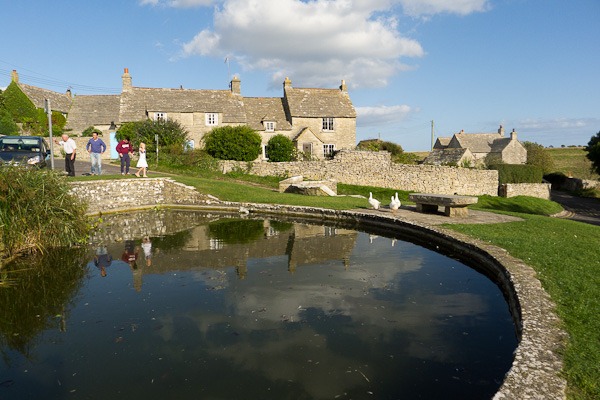
Accessible Rural Area Expanding eg Corfe Castle = 980 people

  • Relatively fewer older people
  • New arrivals who commute to work (91% of people have car access or work from home)
  • Expanding population as there is a baby boom because of the young families who move into the area
Consequences of expansion:

  1. 91% of families have 2 or more cars, increasing air pollution, congestion and likelihood of traffic accidents
  2. Traditional rural identity may be lost due to influx of foreigners 
  3. May be conflict between established locals and new families moving in
Changes in Services:
Changes for the better J
Changes for the worse L
-Opening more nurseries has created increased the number of children in schools. Grants and shared headships can be used to support schools

-Many village stores have been replaced by supermarkets which have cheaper prices, longer opening hours and often run a bus service from local villages

-Grants can be obtained for the refurbishment of village halls

-Cooperation between post offices and banks to provide an combined service

-Increase in number of mobile libraries

-New types of village shops like farm shops or garage shops

-Grants available for community bus or taxi services like the postal bus service which combines transport with letter delivery

-Mini-health centres have been set up in larger villages and grants are available to support rural GPs and pharmacies
-Local services have been cut

-Aging population means there are fewer school children, with schools competing for them or closing, and wealthy parents putting children into public schools

-Post offices being downgraded to part time or hole in the wall, with pension services often being moved to banks

-Some GPs have closed and there is a decline in dentist surgeries

-Funds have been cut for youth clubs and activities for the elderly

-Closure of uneconomic bus routes and reduction in cross-county services along with an increase in car ownership


Purbeck
UK
0-14
18%
20%
15-64
60%
64%
65+
22%
16%

Wednesday, 20 February 2013

Population and Resources

OVERPOPULATION is when the population of an area is too excessive relative to the technology and resources available for the inhabitants of that area to maintain a decent standard of life.

eg
    
It implies that with no change in the level of technology or resources a reduction in population would lead to an increase in living standards.

It is not always associated with countries with high densities of population, but desert countries like Burkina Faso may have a low carrying capacity.

Characterized by:

  1. Low GNP per capita
  2. High Population density
  3. Net Migration Loss
UNDERPOPULATION is when there is not enough people in a country to efficiently use its resources.

eg
  
An increase in population would mean a more efficient use of resource and increased living standards for all inhabitants. By 2015 Canada could have double it's inhabitants and still maintain its standard of living.

OPTIMUM POPULATION is the number of people when working efficiently with all the available resources and technology that produces the highest quality of life.

Saturday, 2 February 2013

China's One Child Policy


China’s One Child Policy
Policy: It officially restricts married, urban couples to having only one child, while allowing exemptions for several cases, including twins, rural couples, ethnic minorities, foreigners living in China, the Special Administrative Regions of Hong Kong and Macau and parents without any siblings themselves. It is an anti-natilist policy.
·         Parents who have only one child get a "one-child glory certificate," which entitles them to economic benefits such as an extra month's salary every year until the child is 14. Among the other benefits for one child families are higher wages, interest-free loans, retirement funds, cheap fertilizer, better housing, better health care, and priority in school enrollment.
·         Women who delay marriage until after they are 25 receive benefits such as an extended maternity leave when they finally get pregnant. 
·         The one-child program theoretically is voluntary, but the government imposes punishments and heavy fines on people who don't follow the rules. Parents with extra children can be fined, depending on the region, from $370 to $12,800 (many times the average annual income for many ordinary Chinese). If the fine is not paid sometimes the couple's land is taken away, their house is destroyed, they lose their jobs or the child is not allowed to attend school.

When: Introduced in 1978 (3 years after Mao’s death) and initially applied to first-born children from 1979

By Who:
 Established by Chinese leader Deng Xiaoping

Aims:
·         Alleviate social, economic, and environmental problems in China
·        - Control China’s burgeoning population – It was 940 million in 1976
·         Reduce the strain on scarce resources
·         After The Three Years of Great Chinese Famine where there were at least 45 million premature deaths from 1958 to 1962

Extent of its Success:
·         A spokesperson of the Committee on the One-Child Policy has said that approximately 35.9% of China's population is currently subject to the one-child restriction
·         Authorities claim that the policy has prevented more than 250 million births between 1980 and 2000, and 400 million births from about 1979 to 2011
·         This claim is disputed by two independent scholars, who put the number of prevented births from 1979 to 2009 at 100 million
·         In 1970 the average woman in China had almost six (5.8) children, now she has about two. The most dramatic changes took place between 1970 and 1980 when the birth rate dropped from 44 per 1000 to 18 per 1,000. Demographers have stated that the ideal birth rate for China is 1.7 children per family.

Moral Concerns and problems: The policy has been implicated in an increase in forced abortions, female infanticide, and underreporting of female births, and has been suggested as a possible cause behind China's gender imbalance. There have been accusations of the policy being enforced by torture and forced sterilization.
·         Mothers pregnant with a second child can be forced to have an abortion, even beyond the point where the foetus is viable, and can even be during labour
·         Parents want a boy as they are seen as better future earners, and they inherit property (according to archaic Confucius belief).
·         Many only children are spoilt by parents and this leads to poor communication and cooperation skills and an increase in type 2 diabetes.
·         If both people in a couple are both single children this can lead to family arguments as children have historically been caregivers in a country with little social safety net.
·         Lead to social conflict, high administrative costs and led indirectly to a long-term gender imbalance at birth.

·         Couples who flout the rules face hefty fines, seizure of their property and loss of their jobs.

Policies still in place:
·         A Chinese government thinktank is urging the country's leaders to start phasing out its one-child policy immediately and allow two children for every family by 2015
·         The foundation recommends a two-child policy in some provinces from this year and a nationwide two-child policy by 2015. It proposes all birth limits be dropped by 2020
·         Boosting social services for the elderly
·         Banned sex-selective abortion and rewarded rural families whose only child is a girl

Sustainibility?:                                                                 
·         Many demographers argue the policy has worsened the country's aging crisis by limiting the size of the young labour pool that must support the large baby boom generation as it retires.
·         Around 12 years ago, there were six workers for every retiree.  By 2030 it is estimated that there will be just two workers for every retiree. 
·         Increasing number of China's young adults are having to send their elderly parents to hospices because the burden of care is too great for just one child
·         Contributed to the imbalanced sex ratio by encouraging families to abort baby girls, preferring to try for a male heir.
·         If China sticks to the one-child policy, we are looking at a situation as bad as the one in southern Europe. Old people will make up a third of the population by 2050.
·         This policy is not sustainable as it has caused a wide range of social issues in China, as well as caused a major discrepancy between the number of boys and girls, leading to fewer couples in the future and therefore fewer children. The moral issues with this policy are also numerous, and China may need to change the way it enforces to become accepted by other countries that it could trade with. It has also created an aging population, and in the future this could lead to a high dependency ratio, greater number of illnesses and a higher death rate.